


The market’s recent behavior can best be described as turbulent of late, with plenty of twists and turns keeping investors on edge. At the heart of this turbulence is a potent mix of recession anxiety and the ever-watchful eye on Federal Reserve policy. If you’ve tuned into financial news lately, these topics are dominating the headlines. Some analysts claim a recession is not just looming, but knocking on our doors—and the evidence may be hard to ignore.
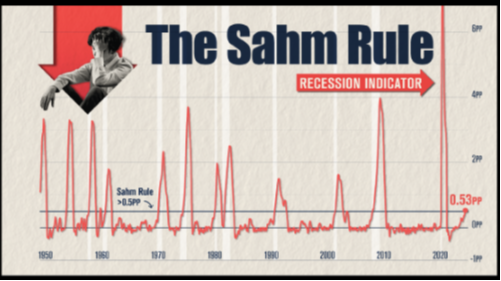
One key indicator, the “Sahm Rule”, has started flashing warning signs. For those unfamiliar, this rule suggests that when the three-month average U.S. unemployment rate rises by 0.50% or more from its 12-month low, a recession is in motion. Well, in early August, this very signal was triggered, with the unemployment rate climbing to 4.3%. Historically speaking, the Sahm Rule has been an accurate predictor, aligning with every recession since 1970 without fail.
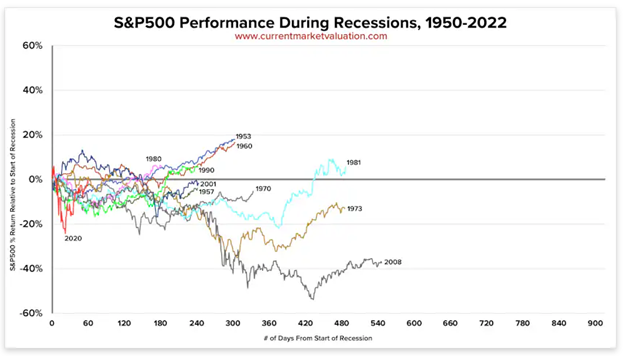
Let’s skip the detailed dive into Fed Policy, the impact of interest rate cuts, and if I think a recession is on the imminent horizon or not – spoiler alert I personally don’t but as always it’s possible I’m wrong. Let’s instead look into what I think is more important than IF a recession is looming and instead focus on whether we should care as investors. I mean look at the below chart which details the market performance during the last 11 recessions. The stock market is actually POSITIVE during five of those eleven. I don’t think the average investor would think that would be the case; that the stock market actually went up during a recession. I think current investors are so afraid of the word “recession’ because most remember full well the most horrific of all recessions the one that occurred in 2008. Recessions aren’t directly tied to stock market performance - this is Takeaway #1 of this piece.
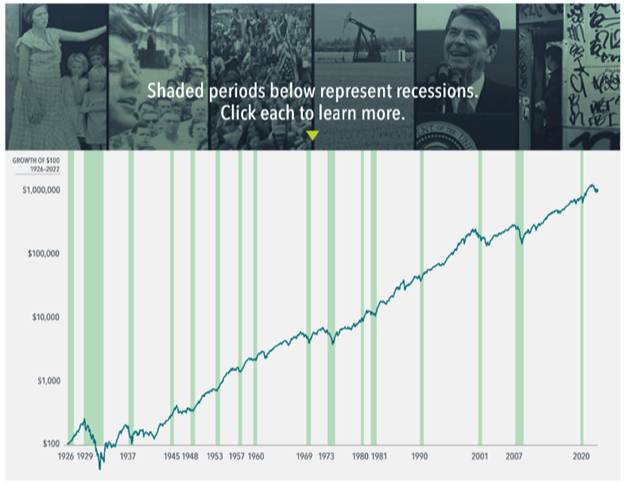
When you take a long-term view of investing, as we do, then my care about whether a recession is on the horizon is not very high. I mean here’s a chart showing the growth of $100 invested in 1926 until 2022. Take a minute to look at the journey that $100 went on over the years and all the recessions it experienced along its way to growing to nearly $1,000,000. Takeaway #2is we are long-term-minded investors.
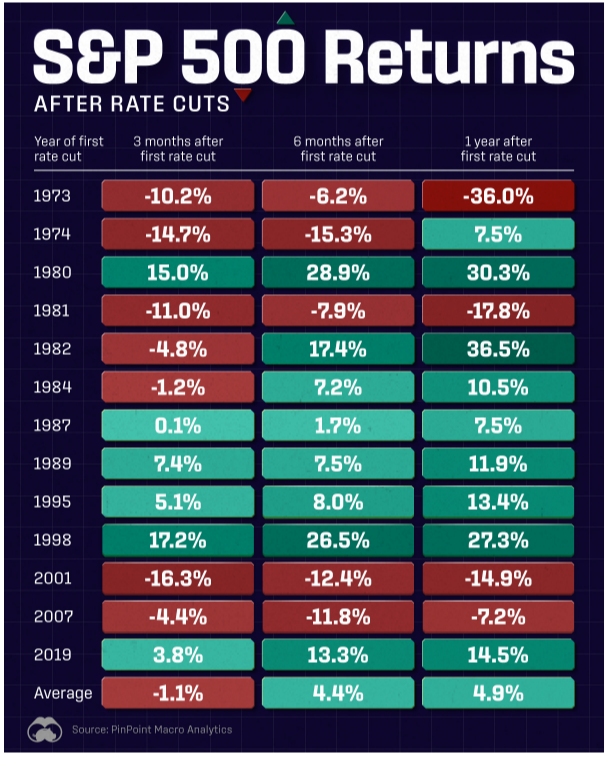
And finally, let’s take a quick look at how the stock market typically responds after rate cuts. The consensus is high that rate cuts are on the horizon so I personally do think we can expect to see those. But again, if you start looking through a 6-month or 12-month lens when viewing stock market performance and don’t allow ourselves as investors to get sucked into the daily news then it’s clear that HISTORICALLY the stock market has performed pretty well after rates are cut. This is Takeaway #3.
My hope and goal is that this type of material helps ease investing anxiety and provides transparency into how we view the markets. But please also know we are always just a phone call away for specific conversations on your portfolios and personal goals.
Until next time.
Important Disclosures:
These views are those of the author, not of the broker-dealer or its affiliates. This material contains an assessment of the market and economic environment at a specific point in time and is not intended to be a forecast of future events, or a guarantee of future results. All investments involve risk, including loss of principal. Forward-looking statements are subject to certain risks and uncertainties. Actual results, performance, or achievements may differ materially from those expressed or implied. Information is based on data gathered from what we believe are reliable sources.
The Standard & Poor's (S&P) 500 Index tracks the performance of 500 widely held, large-capitalization U.S. stocks.


